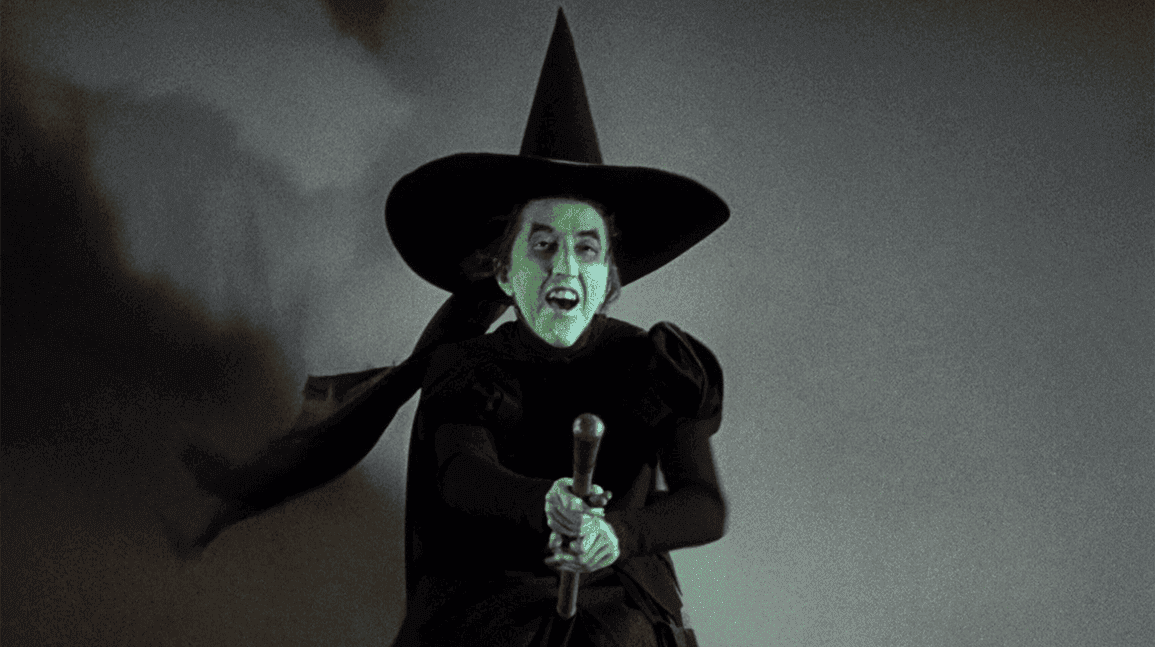
"I’ll get you, my pretty, and your little dog, too."
Whether you pose that question to an 85-year-old or a 10-year-old, that line from "The Wizard of Oz" (and countless others) still sparks memories 86 years after the classic movie's release.
With "Wicked: For Good" topping the box office and transporting a new generation to Oz, interest in the world behind the curtain has never been stronger.
That renewed excitement sets the stage for Heritage Auctions’ Hollywood/Entertainment Auction on Tuesday and Wednesday, featuring several pieces from the Emerald City, including Margaret Hamilton’s screen-worn "flying hat" from her unforgettable portrayal of the Wicked Witch of the West.
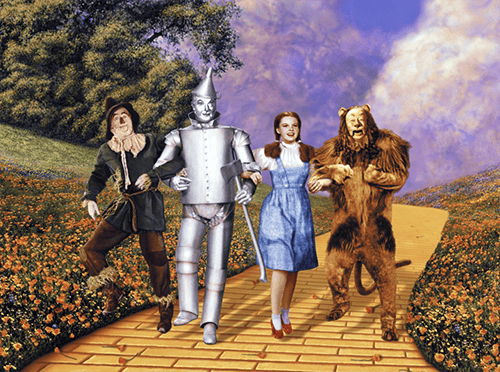
Just over a year ago, Heritage sold Dorothy’s ruby red slippers from the film for $32.5 million, setting the record for the world’s most valuable piece of movie memorabilia ever sold at auction.
In that sale, the Wicked Witch's flying hat also sold, and it was attributed and matched to the “Arrival in Munchkinland” sequence. The sale commanded $2.9 million, and many believed this was the only hat left in private collections as it had changed hands only once in more than half a century.
However, that soon changed when the Heritage's entertainment catalog was released a couple of weeks ago and was headlined with another Wicked Witch hat.
Just like the provenance of last year’s ruby slippers and Wicked Witch hat, this hat originated from David Weisz, who was the owner of The David Weisz Co., which conducted the legendary MGM Auction in 1970.
Like the ruby slippers, the legendary designer, Adrian, crafted this enduring cultural symbol from Hollywood’s Golden Age during his time at MGM.
Made of black, wool bunting, the hat shows clear signs of age, and according to the lot description, it has undergone “recent, sensitive professional conservation to tighten the brim to the cone.”
As a collector, there is always the fine line of how much you alter a piece to preserve its longevity and restore it to how it looked during production, which can be widely debated. Given the historical significance of the piece, sympathetic conservation was needed to ensure the hat remains structurally stable to withstand another eight decades.
I’ve seen too many instances, mostly with foam latex, where collectors have gone beyond what is necessary and have restored pieces back to what they looked like on set (i.e., brand new), which, in my opinion, detracts from the artifact (literally and figuratively) as the new material outweighs what is original.
The wear, tear, and distress tell a story that cannot be replicated, and it should remain unaltered. But again, this is not the case for the Wicked Witch’s hat, and this was an imperative decision.
You might be wondering, what makes this a “flying" hat? Simply put, it’s the elastic chinstrap used during flying sequences to keep it securely on Hamilton’s head.
Hats of this version are incredibly rare — the only one to surface recently was Michael Shaw’s, sold by Heritage last December. Other versions of the hat do not include a chinstrap, and the only other surviving example I’ve seen resides in the Academy Museum of Motion Pictures in Los Angeles, alongside their pair of ruby slippers.
These pieces transcend their on-screen purpose; they serve as symbols that encapsulate emotions tied to moments in our lives — memories, people and experiences that cannot be replicated.
Being in the presence of the hat instantly took me back to watching the film for the first time with my mom and grandmother in elementary school, and it quickly became one of my all-time favorites.
While Hamilton’s flying hat remains the headliner of the sale, the catalog also features other legendary Oz artifacts.
From the acclaimed Michael Shaw Collection comes Garland’s right-foot “rehearsal slipper,” identified by Kent Warner, who cataloged the legendary 1970 MGM auction.
While this is not the iconic look everyone envisions when they hear “ruby slippers,” this slipper is made of red silk faille and was worn by Garland during practice scenes, allowing her to rehearse without risking the delicate jeweled pairs.
Also included is a packet of glass bugle beads, intended as replacements for the ruby slippers’ beadwork, further linking it to the film’s legendary costume.
While not a ruby slipper itself, the significance of this piece cannot be understated — it is a slipper worn by Garland and likely the only surviving rehearsal slipper (despite being labeled “No. 2 Judy Garland”).
For me, the handwriting and signs of wear tell a story that speaks to the lore surrounding the film’s production and its lasting impact on cinema history.
Even though it is not a complete pair or adorned with rubies, this slipper remains a significant piece of movie history.
It wouldn’t be a "Wizard of Oz" section without Dorothy’s dress and blouse, right?
Garland’s original crème blouse, accompanied by a gingham dress used for touring purposes, is also being auctioned from Shaw’s collection. A central part of one of the most recognizable ensembles in film history, this blouse tied together Dorothy’s simple, farm-girl attire with her gingham pinafore.
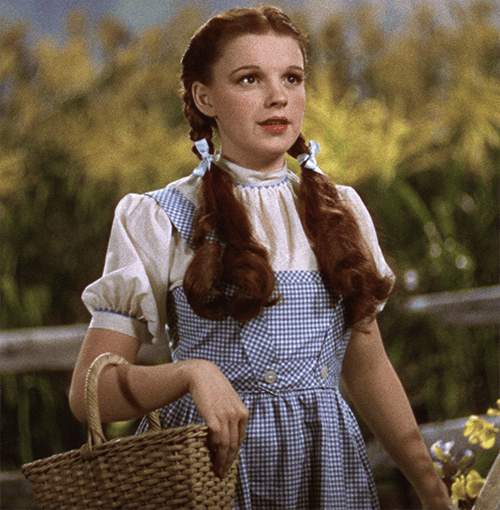
In this case, the full ensemble isn’t entirely original, as the dress is a replica used for touring purposes, acquired by Shaw from Warner alongside the original blouse.
Many collectors might debate blending replica with original pieces, but it works here — Shaw obtained the replica directly from Warner, completing the ensemble in a way that elevated its presence for display in Shaw’s "Hollywood on Tour" in the 1980s and 1990s.
With "Wicked" sparking an "Oz" renaissance, pieces like this blouse and touring dress allow fans and collectors alike to connect with the film’s enduring legacy, seeing the character of Dorothy through the lens of both history and imagination.
Adding a touch of Emerald City whimsy to the sale is the “Wash & Brush Up Co.” Scarecrow groomer hat. In one of my favorite sequences in the film, this hat was worn by a small ensemble of groomers who pampered Dorothy, Scarecrow, the Cowardly Lion, and the Tin Man shortly after they arrived in Emerald City.
I absolutely love this hat — the playful imagination of Adrian, MGM’s legendary costume designer, shines through in the green trim and tiny chinstrap.
Interestingly, this piece isn’t from Shaw's collection, but it was originally part of the famous 1970 MGM auction, giving it strong provenance for an already highly coveted artifact.
Bookending the auction is the most unique and personal artifact: a copy of "The Wizard of Oz" signed by Garland and the major cast members.
Originally published in 1903, this edition was inscribed to Diane Catherine, the daughter of Garland’s private tutor, by Garland herself. Among the signatures are Frank Morgan, Ray Bolger, Bert Lahr, Jack Haley, Clara Blandick, Hamilton, Bobbie Koshay (Garland’s body double), Carl Spitz (owner of Terry, the dog who played Toto), and my absolute favorite of all the signatures, Toto’s paw prints! How incredible is that?
Next to Bolger’s signature is a doodle of the Scarecrow that he drew, adding so much personality, it feels as if the Scarecrow did it himself.
While an opening bid of $200,000 might seem high, it is warranted, given the tangible link to the legendary cast whose performances have left a mark on generations.
Together, these artifacts embody the magic behind "The Wizard of Oz." Each piece tells a story, elicits emotion, symbolizes craftsmanship, performances, and memories that have impacted generations.
Dan Gastin is a seasoned expert in the entertainment memorabilia industry with over five years of experience and an active passion for collecting movie props and costumes. He previously worked at Propstore.