As we flip the calendar to 2026, cllct is assessing the current state of the hobby.
We've assembled a panel of the top experts in the industry to recap some of the biggest trends of the past 12 months — both the good and the troubling.
Plus, we've looked into our crystal ball to try to forecast what lies ahead in 2026.
In the 10th installment of our two-week series, our panel peers into its crystal ball to forecast how artificial intelligence will impact the hobby.
RELATED STORIES:
- The year in collectibles: Are high-end cards propping up the market?
- The year in collectibles: Have repacks had a positive impact?
- The year in collectibles: Is the surge in TCG here to stay?
- The year in collectibles: How bad is shill bidding?
- The year in collectibles: What would you change about the hobby?
- The year in collectibles: What was most surprising trend of 2025?
- The year in collectibles: Did the hobby get better in 2025?
- The year in collectibles: Biggest issues facing the hobby?
- The year in collectibles: Hottest cards and athletes
(Answers have been lightly edited for brevity and clarity. Questions were distributed before Collectors' acquisition of Beckett on Dec. 15.)
How could artificial intelligence impact the future of the hobby?
Brian Dwyer, president, REA:
Similar to how Non-Fungible Tokens (NFTs) added a glimpse into the future of collectibles a few years ago, AI could do something similar with the digitization of cards, comics and various types of collectibles.
Between the ability to create dual-ownership through various types of tokenization to the technological advancements being made to design, we could certainly see some interesting things in the near future.
Like anything else, there are going to be some collectors who rally behind these innovations, while other detractors will dispel it with the aim of keeping the traditional elements of the hobby front and center. I think both can coexist, and AI has the potential to open up some untapped areas for the hobby.
Elizabeth Gruene, GM of pop culture, PSA:
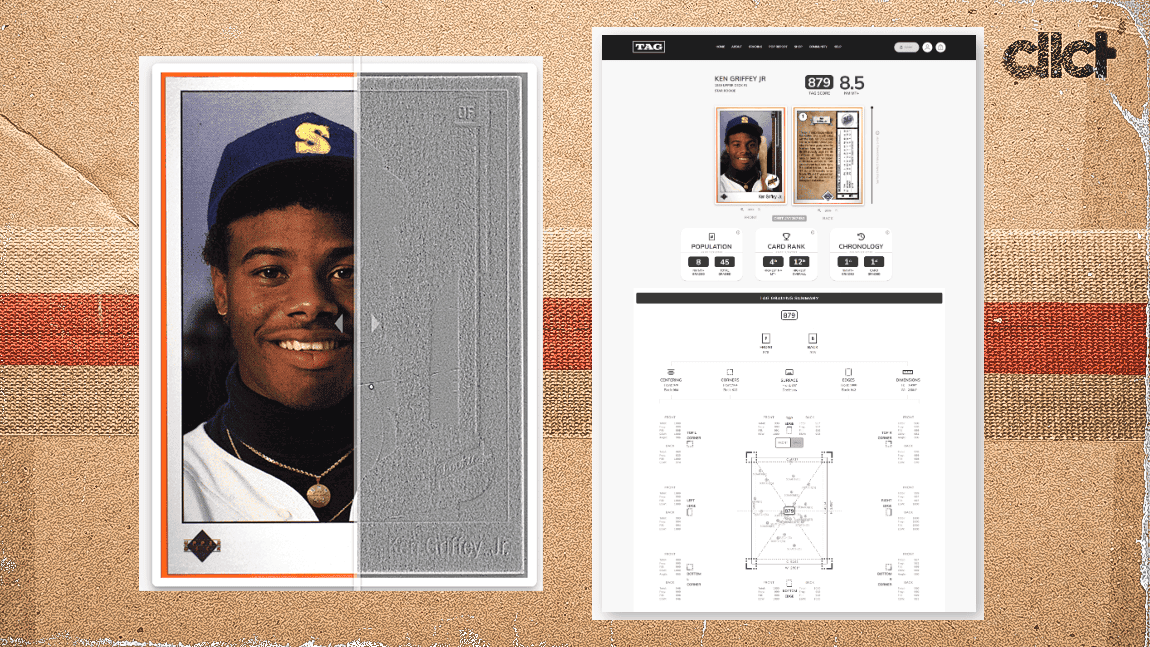
It will definitely be interesting to see how AI can provide more assistance with evaluating the condition of your cards — whether that is with centering or helping to flag whether the card is counterfeit or not. There is a lot AI can do to help collectors better understand the cards they have.
David Hunt, president, Hunt Auctions:
As with any new technology, there will be amazing innovation and also new challenges as a result.
From an authentication and grading perspective, AI could prove to be incredibly useful. That is both from a protective and subjective approach. Unfortunately, I would guess the ability to utilize AI to assist in forgery-related entities or fraudulent business matters could also become a related concern.
Adam Ireland, VP and general manager of global collectibles, eBay:
AI has the potential to make the hobby more accessible, informed, and trusted.
At eBay, we’re already using AI to reduce friction for collectors — helping people discover items, list more easily and price with greater confidence. For example, our simplified listing experience for sports cards uses AI to pre-fill key details and offer smarter pricing guidance based on a card’s value and condition. This shortens listing time, improves completion rates and helps buyers find what they’re looking for.
Looking ahead, AI will play an even bigger role in transparency, discovery and trust across the hobby.
Chris Ivy, director of sports auctions, Heritage Auctions:
AI is certainly not going anywhere, and it will continue to change our professional and personal lives. However, in a specialized industry such as ours, I would caution all of us against too much reliance on it at this early stage.
By definition, AI is a work in progress. For it to be helpful, in a meaningful way, machine learning requires quality inputs. Otherwise, it’s garbage in, garbage out.
The evolution of this technology is certainly going to enhance efficiencies, but in areas such as the collectibles field, which often require significant expertise, it’s important we realize what it is capable and not capable of in the current environment.
AI can offer a nice assist, but we are nowhere near complete dependency at this stage, nor is it likely we will get to that point anytime soon, if ever.
Jason Masherah, president, Upper Deck:
The biggest potential impact will be in grading. When the technology evolves to a place where we can take the subjectivity out of grading, the industry as a whole will benefit from AI.
Mike, Junk Wax Hero on YouTube:
It already is, with many suspecting Topps is using generative AI to write the backs of cards. PSA is using AI for parts of the grading and authentication process. Many collectors want a full AI grading process, but no one knows what that really looks like.
Matt Nelson, president, CGC Comics:
AI can certainly add value to certification, particularly with submitting and information sharing, but I do feel there will always be a human element in grading, particularly with comic books.
Comics are multi-dimensional and grading them is very nuanced, more so than any other collectible.
Evan Parker, founder, Mantel:
It won't be long before every card passing through PSA, Beckett, CGC, etc is evaluated by AI, even if a human contributes to the final grade.
AI will predict future card values to help collectors make buy/sell/trade decisions. And Topps and Panini will use AI to maintain quality control, so we end up with more cards per pack that are considered Gem Mint 10s.
Matt Quinn, vice president, CGC Cards:
AI has already impacted the hobby for pricing, identification and, to a lesser extent, grading. Pricing data can be scrubbed from large auction houses and other well-documented sales for cards in any grade. Identification with AI will make cataloging a collection much easier.
Grading still has a way to go with properly training AI to distinguish cards that have subtle surface flaws or simple deviations in the foil alignment that might confuse the algorithms.
Claire Shelton, head of video games, PSA:
There’s potential for AI to act as a human-assist tool, rather than something that replaces humans entirely. Especially with 3D objects, the degree physical manipulation is necessary is essential, over just imagery.
I see a world where video game variants or authenticity are augmented by AI, in addition to human confirmation.
Max Spiegel, president, Certified Collectibles Group:
There are a lot of AI use cases, and the ones that truly improve the collecting experience will stick. Collectors want to know what they have and what it’s worth. AI tools that provide identification, a preliminary grade and an estimated value will add significant utility.
I don’t think technology will ever replace the physical nature of collecting (trade show experiences, holding a collectible in your hand, etc.), but it will supplement those real-life experiences.
Kenneth Thrower, director of grading, CGC Video Games and Home Video:
AI should do our chores, so we have more time for our creative work, not the other way around. AI can be used to create a high-quality image database that quickly and accurately identifies and attributes collectibles.
This would leave more time for accurate human grading and collector guide writing, etc., which cannot be well-executed by AI and benefits from the human touch.
Nat Turner, CEO, Collectors:
I think it really can, but not in every facet. The most near-term exciting possibility is helping folks understand what card they just pulled, or what card in their hand is worth grading vs. not, or which card should they sell and which should they keep?
AI is great at answering questions like that by combining multiple data sources to reach some sort of recommendation or conclusion. We’re using it more and more at PSA and Collectors, and it’s going to only help.
Brahm Wachter, head of modern collectibles, Sotheby’s:
It’s likely to affect photo-matching and grading. It could rapidly scale the speed at which photo-matches are found and the way in which those authenticators operate, and it could also make the card grading process far more consistent.