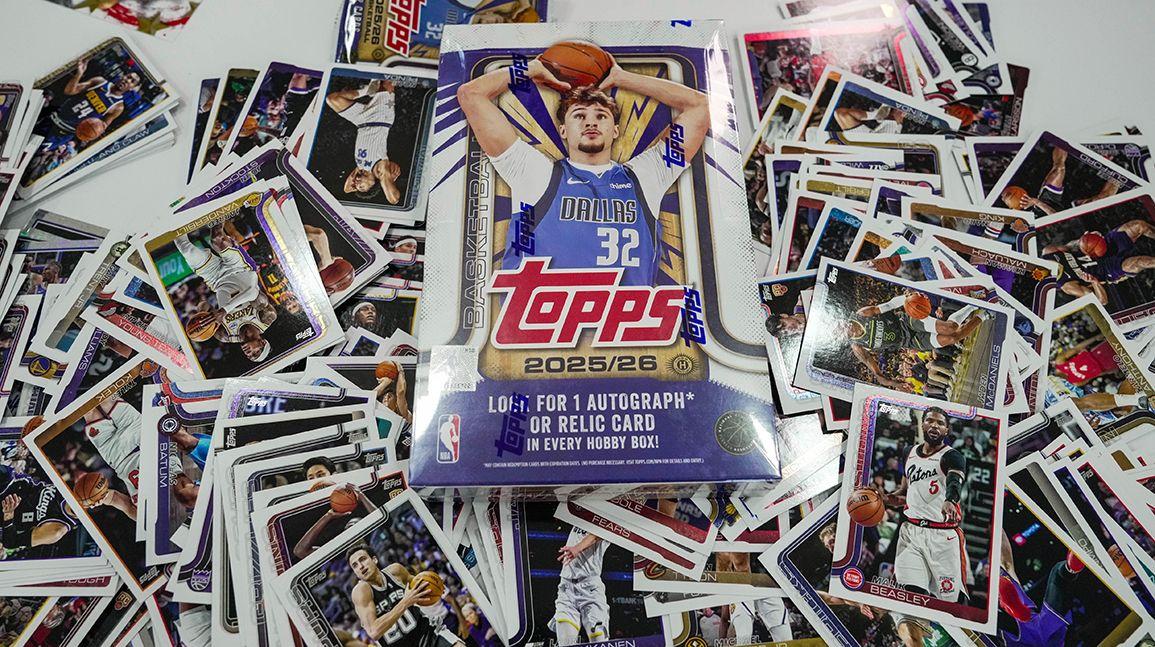
As 2025 draws to a close, cllct takes a look back at a record-setting year in the hobby.
We've assembled a panel of the top experts in the industry to recap some of the biggest trends of the past 12 months — both the good and the troubling.
Plus, we'll look into our crystal ball and try to forecast what lies ahead in 2026.
In the third installment of our two-week series, we look at the biggest issues facing the hobby.
RELATED STORIES:
- The year in collectibles: What was most surprising trend of 2025?
- The year in collectibles: Did the hobby get better in 2025?
- The year in collectibles: Hottest cards and athletes
- The year in collectibles: Hottest cards and athletes
- The year in collectibles: How bad is shill bidding?
(Answers have been lightly edited for brevity and clarity. Questions were distributed before Collectors' acquisition of Beckett on Dec. 15.)
What are the biggest challenges facing the industry right now? What worries you?
Rob Bigler, CEO, TCGplayer:
Trust is absolutely key, which is why we take great strides to protect buyers and sellers on our platform.
Beyond that, I would say simple inventory availability. Exciting releases this year, such as Pokémon’s Prismatic Evolutions and Magic: The Gathering’s Final Fantasy and Avatar sets, brought in new fans throughout 2025. With that increasing popularity, inventory becomes scarce.
Andy Broome, vice president, CGC Cards:
Transparency in the hobby is still a challenge. I believe transparency leads us to a stronger hobby and a stronger marketplace. And not just with grading companies. Transparency and trust across our industry are paramount to continued growth.
Another challenge that does concern me is the proliferation of counterfeit and altered cards. This is not a new problem, far from it. But we are seeing new trends in this area. With tech becoming more available to the masses, we see more counterfeit cards.
Brian Dwyer, president, REA:
As many new collectors enter this space and there continues to be a palpable excitement about collecting in general, we need to ensure we mirror that enthusiasm by continuing to advance the technology and sophistication that’s being used to ensure the hobby remains a safe and trusted space for collectors.
These developments have added a layer of precision and accuracy that’s necessary across all pillars of the hobby and is pivotal for the pricing, provenance and security of collectibles as a whole.
Elizabeth Gruene, GM of pop culture, PSA:
The biggest challenge is getting a newly released product. Retailers are doing a better job of managing the frenzy when a new set comes out, but it is really hard for casual collectors and TCG players to get products at MSRP.
David Hunt, president, Hunt Auctions:
My biggest concern for the industry would actually be the long-term future for the hobby. The industry has proven to have a very large tent that can accommodate all types of collectors, dealers, and auction houses no matter what your interests.
I believe that is incredibly important to maintain for the long-term success of the industry providing great versatility and protecting against stagnation within all areas at once.
Adam Ireland, VP and general manager of global collectibles, eBay:
Authenticity and trust are the biggest challenges facing the collectibles industry today. As the hobby continues to grow, collectors need transparency, reliable data and confidence in the marketplaces they use.
At eBay, building trusted experiences is foundational to everything we do, and it guides how we invest and innovate.
Chris Ivy, director of sports auctions, Heritage Auctions:
When a market experiences massive growth like our hobby has in recent years, some new buyers can become so eager to participate they start spending money before doing the necessary amount of research or gathering enough information.
The urge to have “skin in the game” is powerful, and it impacts every market, from precious metals to growth stocks to hot collectibles.
What I would strongly recommend is newer buyers slow down a bit, digest essential information, and seek guidance from those more experienced, whether that advice is provided by fellow collectors or seasoned industry experts.
An informed buyer is more likely to make wise decisions and stay active in the hobby longer.
Jason Masherah, president, Upper Deck:
A huge issue that has bled over from 2024 is counterfeiting. However, this has seemingly been more prevalent in memorabilia recently than in trading cards.
In 2025, we saw numerous counterfeit operations shut down, which is a great thing, but ultimately, when one is shut down, there are five more ready to take its place.
We, as an industry, need to be prepared to protect our business alongside the athletes and licenses we represent.
From a trading card perspective, we introduced our slabbed, authenticated Rookie Patch Auto cards in our release of 2023-24 The Cup this year to help combat patch swapping. The reception has been very positive from collectors, as they now have an added level of assurance that if they buy one of these cards on the secondary market, they can self-verify if the card has been tampered with.
Matt Nelson, president, CGC Comics:
Rising values tend to invite bad actors who are intent on stealing or deceiving collectors. CGC is always diligent in investigating and pursuing fraudulent activity, but every person should make sure to do their homework when purchasing any certified collectible.
Evan Parker, founder, Mantel:
The price of wax vs. the likely value of what you pull isn't great right now. The best hits are put in the most expensive products that get scooped up by breakers and resellers who then flip them at an even higher premium.
The opportunity to walk into a local card shop and grab a desirable, reasonably priced hobby box and hit something that is worth as much as the cost of the packs is crucial to the hobby continuing to grow.
It's not as sexy as the big hits during live breaks, or the celebrities ripping four-figure wax, or the six-figure bounties, but I'd argue it's the most important element to keeping the industry healthy.
To paraphrase former New York mayoral candidate Jimmy McMillan, the cost of wax IS TOO DAMN HIGH!
Matt Quinn, vice president, CGC Cards:
Keeping fraud at bay is the biggest concern, whether through counterfeiting or unscrupulous methods of sales. Third-party grading will be able to assist with these problems.
Max Spiegel, president, Certified Collectibles Group:
The dynamic, fast-growing and fragmented nature of the collectibles industry still presents too many opportunities for unscrupulous individuals to profit off unsuspecting collectors.
Counterfeits remain a significant issue. Other forms of scams are also a problem.
CCG exists to protect buyers from counterfeit and overgraded collectibles, but we don’t (currently) protect against other types of bad purchases. CCG and other reputable companies will need to continue to expand and enhance their role in buyer protection and education.
Claire Shelton, head of video games, PSA:
We still face an uphill battle in convincing general video game audiences that grading titles of all eras is a worthwhile way to collect.
While there’s no right or wrong way to collect, I don’t think there’s anything that can replicate seeing a copy in the condition you would have gotten it from a store or as a gift.
Nat Turner, CEO, Collectors:
I worry that anytime you have lots of money involved, bad guys start to test the waters and see what they can get away with.
I do worry, especially with repacks, that anyone with access to cards and a cardboard box can make a repack, and then questions arise such as has the repack “set” truly been randomized, is every card they say is in the checklist actually in one of the boxes, and are the cards they say are worth $X actually worth $X? Or worse, are the cards in the repacks actually real?
I blindly trust the big manufacturers such as Upper Deck and Topps, as these are real companies with real investors and a lot to lose if they get cute with that sort of thing. But anyone with a webcam and a pulse can start a repack and start selling them and ripping them on a live breaking platform for example, that worries me, if not overseen more.
I’m sure the vast majority of them are above board, but it only takes one bad experience for someone to leave the hobby. This gap in accountability is why PSA has “entered the chat” a bit to try help this area, both with physical repacks and digital packs.
Brahm Wachter, head of modern collectibles, Sotheby’s:
There’s a constant fear that prices need to always be going up in all categories in order for the collectible community to grow. I’m not sure that’s true.
It’s a market. It’s normal to have ups and downs. If you own an S&P index fund, there will be good days, bad days, good months, and bad ones. Ups and downs are normal and healthy for any market.